
Zeolite – origin and effect
Natural power for your gutThe volcanic mineral zeolite selectively binds harmful substances in the gastrointestinal tract, helps eliminate them and supports your body's natural detoxification — clinically confirmed, CE-certified, 100 % natural.
Discover zeolite products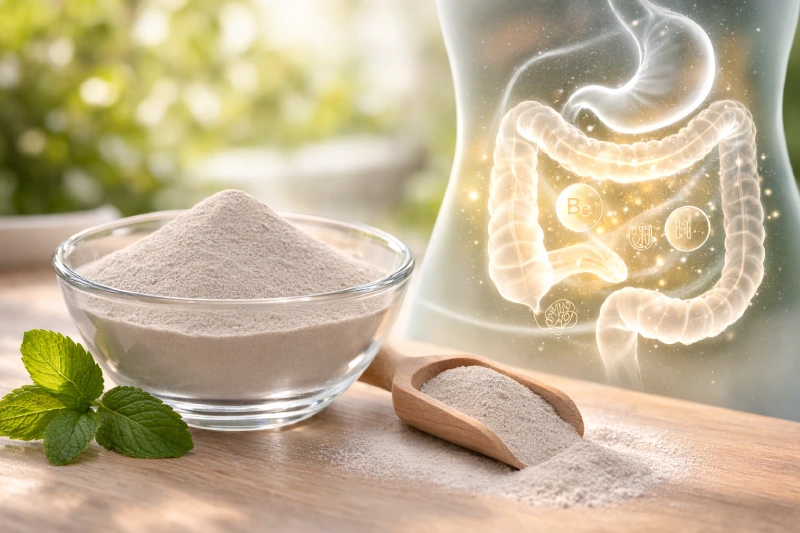
What is zeolite? The origin of a natural volcanic mineral
Zeolite is a natural volcanic mineral (clinoptilolite) that formed millions of years ago through the reaction of glowing volcanic lava with seawater. It has a unique microporous honeycomb structure that can bind harmful substances such as heavy metals and the body's own toxins. The name comes from Greek: „zeo" (to boil) + „lithos" (stone) — the „boiling stone".
Millions of years ago, enormous volcanic eruptions occurred around the world. Where glowing lava reached the sea, it reacted with saltwater — a powerful natural spectacle. This process created a microporous rock with many fine gas inclusions: zeolite.
The mineral is found worldwide — in regions such as Greece, Siberia, Australia and the Americas. Since its discovery in 1756 by the Swedish mineralogist Axel F. Cronstedt, more than 60 different natural zeolite varieties have been identified. For medical use, one variety is especially relevant: clinoptilolite.

How does zeolite work in the body?
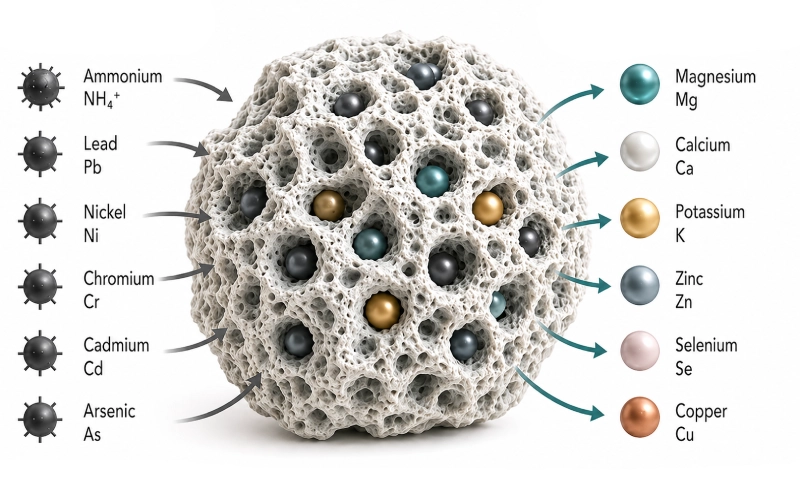
Zeolite clinoptilolite has a unique honeycomb structure with pores and channels that acts like a natural filter, selectively binding harmful substances in the gastrointestinal tract — precisely and safely.
Selective binding
Harmful substances such as lead, arsenic and ammonium are trapped and retained within the honeycomb structure.
Ion exchange
At the same time, valuable minerals such as calcium and magnesium are released — a natural exchange process.
Natural excretion
The bound harmful substances are excreted naturally through the intestines. Zeolite is not metabolised.
Zeolite clinoptilolite: natural detoxification & protection for the gut
Because of the special honeycomb structure of clinoptilolite, the effect of zeolite is like that of a biological filter: with pores ranging from 0.4 to 0.7 nanometres, zeolite can selectively absorb harmful ions. It follows a selective binding order — heavy metals and toxins are bound preferentially, while important nutrients remain in the body.
At the same time, a natural ion exchange takes place: while harmful substances are bound, zeolite releases valuable minerals and trace elements to the body.
In addition, clinical studies show that zeolite clinoptilolite can strengthen the intestinal barrier. A stable intestinal barrier is crucial to prevent unwanted substances from entering the bloodstream — a condition known as leaky gut.
Tested quality as a medical device

Why it is a medical device
Zeolite clinoptilolite is not metabolised by the body but works purely physically. For this reason it is classified as a medical device — not as a dietary supplement or medicinal product.

CE certification
CE certification is essential for safety: only products with the CE mark and a test number are subject to strict quality controls, comparable to pharmaceutical manufacturing.

Particle size
Another important quality feature is particle size: 1–10 micrometres is optimal to ensure high effectiveness — without the use of nanoparticles.
Zeolite, bentonite and healing clay: what is the difference?
Zeolite (clinoptilolite), bentonite (montmorillonite) and healing clay (loess or loam earth) are natural mineral earths used to bind pollutants and to soothe the digestive tract. The decisive difference lies in their structure: zeolite has a stable crystal framework with defined pores and binds pollutants selectively through ion exchange. Bentonite is a swelling layered silicate that primarily absorbs fluid and adsorbs non-selectively. Healing clay is a natural mineral mixture with a large surface area that binds broadly and buffers stomach acid.
| Criterion | Zeolite (clinoptilolite) | Bentonite (montmorillonite) | Healing clay (loess/loam) |
|---|---|---|---|
| Mineral structure | Crystalline framework silicate with a microporous honeycomb structure (pores 0.4–0.7 nanometres) | Swelling layered silicate – water and substances are stored between the layers | Natural mixture of clay, silt and quartz minerals without a defined pore structure |
| Mode of action | Selective ion exchange: pollutants are bound while valuable minerals are released | Non-selective adsorption and strong fluid absorption (swells in the intestine) | Adsorption across a large surface area, plus buffering of excess stomach acid |
| Binding behaviour | Preferentially binds heavy metals (e.g. lead, arsenic) and ammonium – nutrients remain largely untouched | Binds broadly and with little selectivity – desirable substances may be bound as well | Binds very broadly: acid, fats, gases and toxins – as well as nutrients and medicinal agents |
| Structural stability | Stable crystal lattice, does not swell, is not metabolised | Swells considerably – sufficient fluid intake is particularly important | Barely swells but settles quickly – needs to be drunk without delay |
| Clinical evidence | Extensive: more than 50 studies and publications on PMA zeolite, including on the intestinal barrier and heavy metal binding | Considerably narrower – only a few clinical human studies on detoxifying effects | Mainly traditional use; individual studies on heartburn and irritable bowel symptoms |
| Typical application | Intestinal detoxification, strengthening the intestinal barrier (leaky gut), support with increased pollutant exposure | Traditionally used for diarrhoea, heartburn and to soothe the digestive tract | Heartburn, hyperacidity, bloating, and externally as a mask or compress |
| Quality indicator | CE-certified medical device with a certification number, particle size 1–10 micrometres, high silicon content | Quality and classification vary widely by supplier (from medical device to cosmetic raw material) | Usually a medicinal product or foodstuff; origin, particle size and heavy metal content vary by mining area |
Conclusion: which mineral is the right one?
For the targeted binding and elimination of heavy metals and for strengthening the intestinal barrier, zeolite clinoptilolite is the scientifically best-researched choice. Bentonite can be useful for acute digestive complaints and healing clay above all for hyperacidity and heartburn – but neither replaces evidence-based detoxification. What matters with all three: only use products with a clear quality declaration, ideally CE-certified medical devices with a certification number.
Can aluminium be released from zeolite?
This is a valid question and one that is often asked. Zeolite naturally contains aluminium as part of its crystal lattice. Whether this aluminium can be released depends on the silicon-to-aluminium ratio: the higher the silicon content, the more stable the crystal lattice.
PANACEO's PMA-Zeolite has a particularly high silicon content. Clinical studies confirm: even after three months of use, aluminium levels in the blood remain unchanged — a clear indication of the safety of high-quality zeolite clinoptilolite.
Important: when purchasing, always look for CE-certified zeolite products with a test number and a particle size of 1–10 micrometres — this ensures maximum binding of harmful substances without nanoparticles.
Side effects & interactions: what to keep in mind when taking zeolite
Zeolite clinoptilolite is generally very well tolerated — it is not metabolised and leaves the body completely by natural means. As with any medical device, there are nevertheless a few points you should be aware of.
Possible side effects
Especially at the start of use, constipation may occur in isolated cases. In that case: increase your fluid intake and reduce the dosage if necessary. Bloating or a feeling of fullness occasionally occurs at the beginning — these adjustment reactions usually subside within a few days.
Interactions with medication
Leave an interval of around two hours between taking medication and zeolite, and take your medication before the zeolite unless your doctor has advised otherwise.
Taking it correctly
Always take zeolite with plenty of water (at least 250 ml) and make sure you stay well hydrated in general. Do not take it together with alcoholic or caffeinated drinks.
When to seek medical advice before use
In certain situations, zeolite should only be used after consulting your doctor: in cases of existing constipation, impaired kidney function, chronic illness, ongoing drug therapy, and during chemotherapy or radiotherapy. Pregnant and breastfeeding women as well as children and adolescents under 18 should also seek medical advice before use.
Should you notice any unexpected symptoms while taking it, stop using the product and contact your doctor. All product-specific information can be found in the instructions for use of your PANACEO product.
Clinical studies on zeolite
More than 50 scientific publications demonstrate the effectiveness and safety of zeolite clinoptilolite.
Heavy metal elimination in humans
A human study shows: activated clinoptilolite zeolite increases the excretion of heavy metals. Safe and well tolerated.
View the study (Dovepress) →Blood values & mineral balance
PMA-Zeolite lowers heavy metals in the blood, does not negatively affect essential minerals and may support bone health in the long term.
View the study (Frontiers in Medicine) →Irritable bowel: inflammation & intestinal barrier
In patients with irritable bowel syndrome, PMA-Zeolite reduced inflammatory markers, strengthened the microbiome and stabilised the intestinal barrier — without side effects.
View the study (PubMed) →Intestinal barrier in endurance athletes
PMA-Zeolite stabilised the intestinal barrier in athletes, lowered zonulin levels as a leaky gut marker and showed anti-inflammatory effects — without negative side effects.
View the study (JISSN) →Aluminium: exposure falls, no release
Clinoptilolite zeolite reduces aluminium levels in blood, liver, bone and brain — without releasing aluminium itself. Activated PMA-Zeolite proved particularly effective.
View the study (ScienceDirect) →Safety & detox effect
A scientific review confirms: PMA-Zeolite is safe, supports detoxification, protects against oxidative stress and strengthens the immune system — without releasing aluminium.
View the study (Frontiers in Pharmacology) →The right zeolite product for you
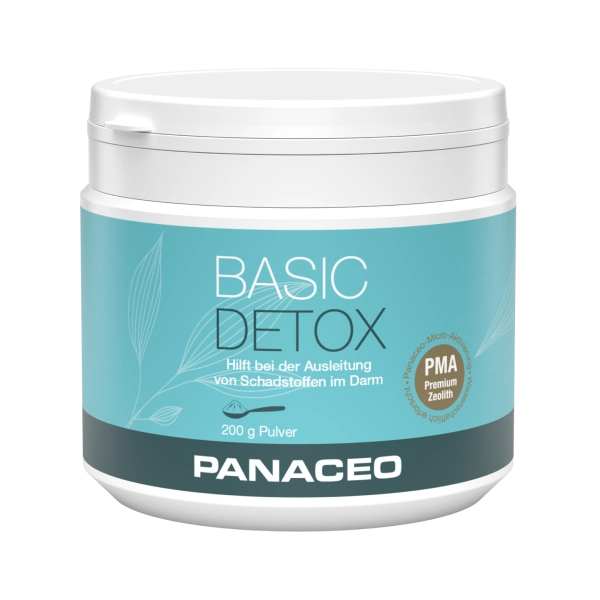
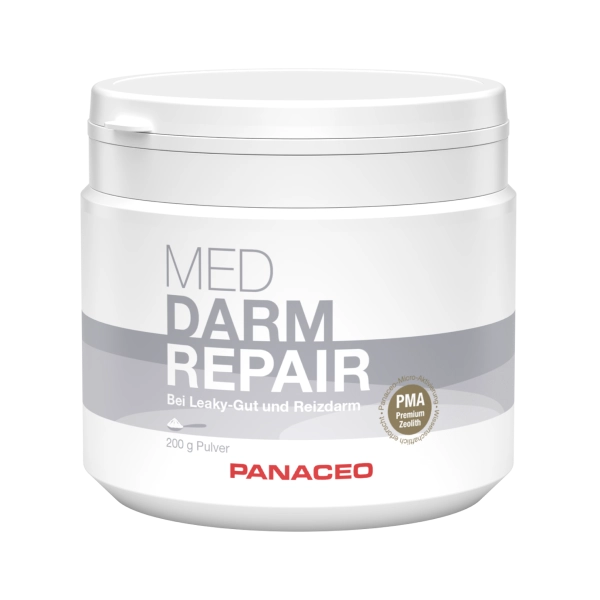
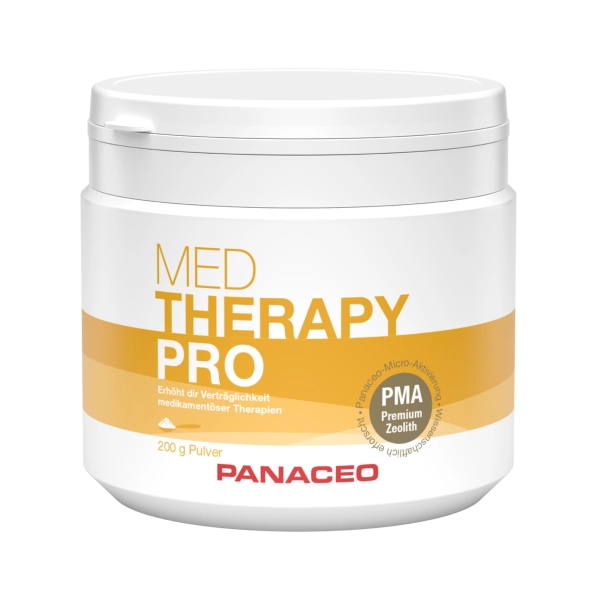
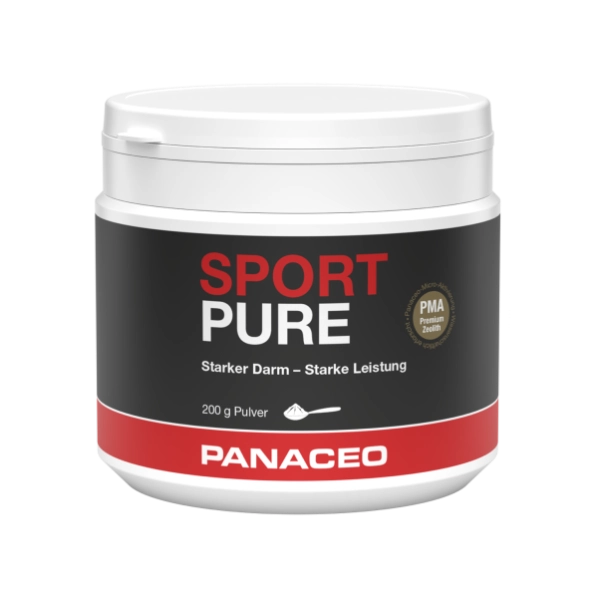
All PANACEO medical devices are based on PMA-Zeolite — CE-certified, clinically tested, made in Austria.
What our customers say
Thousands of satisfied users trust PANACEO zeolite products.
„After 4 weeks of BASIC DETOX, I feel noticeably more energetic and my digestion has improved significantly."
„My gastroenterologist recommended PMA-Zeolite to me — my gut values have improved measurably."
„CE-certified, from Austria, clinically tested — that convinced me. I've been taking it for 6 months now."
Frequently asked questions about zeolite
Only to a limited extent – the two mineral earths pursue different goals. Healing clay consists of a natural mixture of clay, silt and quartz minerals and works across a large, non-selective surface area: it binds broadly and buffers excess stomach acid. That traditionally makes it the choice for heartburn, hyperacidity and bloating.
Zeolite clinoptilolite, by contrast, works through selective ion exchange within a stable crystal lattice with defined pores. As a result, heavy metals and ammonium are bound preferentially, while minerals remain largely untouched. For the targeted elimination of harmful substances and for strengthening the intestinal barrier, PMA-Zeolite is therefore the scientifically far better-researched option.
Both mineral earths should be taken with an interval to any medication and with plenty of fluid. In any case, look for a clear quality declaration – ideally a CE-certified medical device with a test number. See the differences in detail →


