

Frequent travellers and holiday lovers in particular know the dilemma when jet lag, unfamiliar food and the excitement of new impressions throw the sensitive digestive system off balance.
Findings and Causes: What the Research Says
Modern studies show that our gut has a highly complex communication network that is closely linked to the internal clock and to stress hormones. On long-haul flights, jet lag shifts not only sleep but also digestive rhythms. At the same time, the diet changes – often fattier, spicier or sweeter than usual – while unfamiliar bacteria in drinking water or street food challenge the gut flora.
On top of that come psychological factors: time pressure at the airport or the uncertainty of a new language raise the cortisol level, which directly affects the intestinal muscles. The result is an irritated interplay of nerves, immune cells and microbiome – the perfect conditions for irritable bowel on the road.
Risk Factors on the Road
Anyone who tries new specialities without restraint on holiday, loves air conditioning and crowns the day with several espressos increases their risk further. Spicy foods can irritate the mucous membranes, dehydration thickens the stool and stress slows down peristalsis – a trio that quickly leads to digestive complaints on holiday.
Travel-related IBS typically starts with bloating or a feeling of fullness, followed by abdominal cramps, alternating diarrhoea and occasional constipation. For most people the acute "travel hangover" subsides after a few days, but those who already have a sensitive digestive system risk a longer flare-up reminiscent of classic, chronic irritable bowel syndrome.
When to see a doctor
If complaints persist, or if high fever, blood in the stool or severe dehydration occur, you should seek medical advice – even while travelling. This applies especially to children, older people or those with pre-existing conditions.
Practical Countermeasures
- Start the day high in fibre – for example with oats – and drink enough still water.
- Eat small, well-chewed meals to keep digestion moving.
- Get gentle exercise, such as a walk after dinner – this stimulates bowel motility.
- Add short breathing exercises to reduce stress.
- Keep electrolyte solutions handy; chamomile or peppermint tea can be additionally soothing.
- Pro- and prebiotics can stabilise the microflora – ideally started a few days before departure and continued during the trip.

MED DARM REPAIR – Ideal for Your Travel First-Aid Kit
This is where MED DARM REPAIR comes in. According to the manufacturer, the certified medical device with the patented active ingredient PMA-Zeolite can strengthen the intestinal wall, bind pollutants in the gut and eliminate them, and thereby support regular digestion – even while travelling.
How to take it
Simple and straightforward: 2 to 3 times a day, 1 level dosing spoon of powder each – or 2 to 3 times a day, 3 capsules each. Please follow the information in the package leaflet.
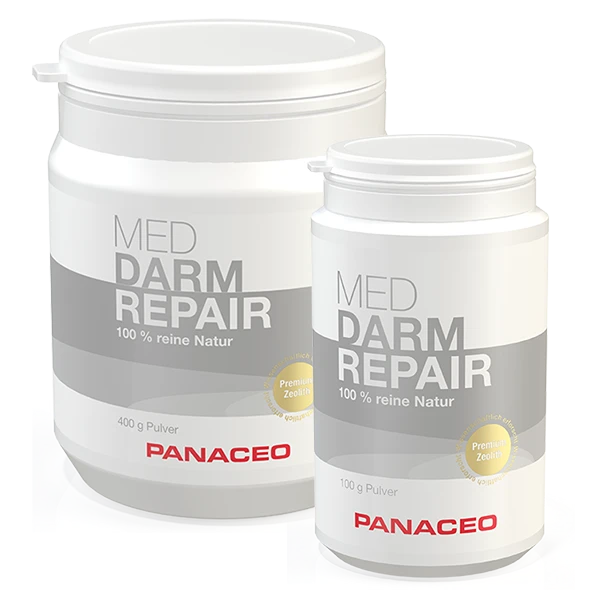
MED DARM REPAIR
Certified medical device with PMA-Zeolite to support the intestinal wall – as powder or capsules, ideal for on the go.
Discover MED DARM REPAIRWhat to Keep in Mind
Travel-related IBS doesn't have to ruin your dream holiday. If you know the causes, minimise the risks and cleverly stock your travel first-aid kit with MED DARM REPAIR, you stay relaxed and gut-fit even far from home.
So pack MED DARM REPAIR right next to your sunscreen and travel guide – your gut will thank you.
Note: This article is for general information only and does not replace medical advice, diagnosis or treatment. MED DARM REPAIR is a medical device to support gut health. If complaints persist or are severe, please consult your doctor.