
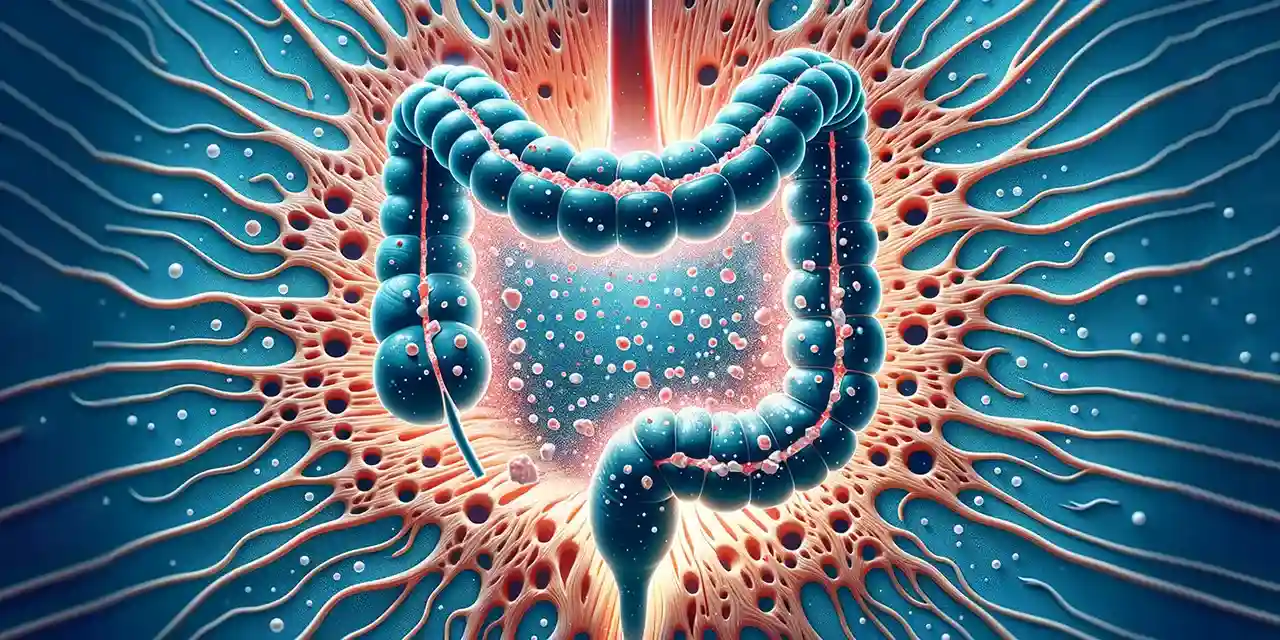
For a long time, the importance of the gut for our health was underestimated. In recent years, however, our understanding has changed, and the gut’s central role in overall health has been confirmed by a wide range of scientific studies. Particular attention is being paid to the negative effects of dysbiosis – an imbalance in the intestinal flora – and to an overly permeable intestinal wall known as leaky gut.
Recent studies indicate that the volcanic mineral zeolite, particularly in its specially processed form as PMA Zeolite, may provide support in cases of leaky gut syndrome. Because of its ability to bind unwanted substances and facilitate their elimination, this natural mineral is increasingly used in therapeutic settings.
What Is Leaky Gut?
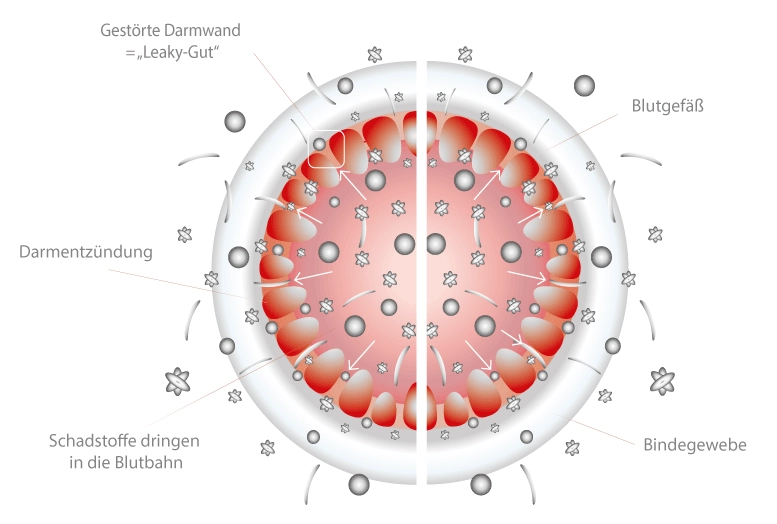
A disruption and increased permeability of the intestinal wall is referred to as leaky gut. The term describes a “leaking” or permeable intestine. There are no actual holes; rather, the connections between the mucosal cells, known as tight junctions, are loosened and no longer close properly. They function much like lock gates. The protein zonulin acts as the gatekeeper and determines how far these gates open.
A certain degree of permeability is completely normal and is probably very important for our health, because it trains the immune system and allows useful substances to be absorbed that would otherwise remain in the intestine.
This positive effect becomes harmful when the permeability of the intestinal wall increases too much. Instead of merely training the immune system, it places it under excessive strain. Alongside useful substances, unwanted substances may also be absorbed, burdening the body and its detoxification organs. In response, zonulin is produced in the intestine and permeability rises beyond the normal level.
Zonulin Marker
The zonulin level is the most reliable marker for assessing the permeability of the intestinal mucosa. Elevated zonulin levels in a blood or stool analysis may indicate increased permeability of the intestinal wall.
What Are the Symptoms of Leaky Gut?
A wide range of symptoms may indicate that the intestinal mucosa has become too permeable. If you suddenly stop tolerating certain foods well and develop a food intolerance, this may be a sign that your intestinal wall is overly permeable. The gut may respond with cramps, bloating or diarrhoea. The damage may also lead to other gastrointestinal complaints such as irritable bowel syndrome, reflux or gastritis.
One challenge with leaky gut is that symptoms do not always occur only in the gastrointestinal tract. We now know that the gut interacts directly with the brain and is our largest immune organ. It is therefore unsurprising that a damaged gut may cause non-specific symptoms throughout the body. Some people experience skin problems such as acne or eczema, while others experience chronic fatigue, difficulty concentrating and nervousness.
The List of Associated Conditions and Symptoms Is Long
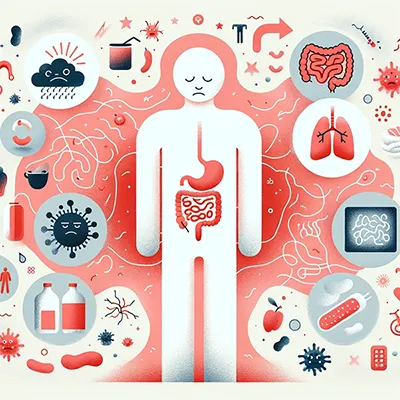
- Digestive complaints such as bloating, abdominal cramps, diarrhoea and IBS symptoms
- Intolerance to various foods (food intolerances)
- Mood swings, potentially including depression
- Skin problems such as acne and eczema
- Frequent infections such as recurring bladder or vaginal infections
- Chronic inflammation caused by ongoing immune activity
- Chronic fatigue and difficulty concentrating
Although the relationship has not yet been conclusively clarified, various chronic diseases are now known to be associated with increased intestinal permeability, including inflammatory bowel diseases such as Crohn’s disease and ulcerative colitis, as well as various allergies.
An estimated 70 to 80 percent of all the body’s immune cells are located in the gut. The intestinal wall is therefore one of the most important protective barriers for our health.
How Is the Intestinal Barrier Structured?
The mechanical intestinal barrier is not a rigid wall. Instead, it consists of two dynamic layers: the intestinal mucosa and a protective mucus layer. The innermost layer, which comes into contact with food, is the intestinal mucosa. Its surface is not smooth; around four million finger-shaped projections known as intestinal villi extend inward.
At the tips of these villi are microvilli, which release various proteins and digestive enzymes. These filter and process nutrients from food and help the body absorb them. In front of the villi, which also contain IgA antibodies, lies a protective mucus layer. This prevents beneficial gut bacteria from moving too close to the intestinal mucosa and triggering an excessive immune response.
Why the Gut Becomes More Permeable
Persistent stress or regular, intense exercise and endurance training may be enough to impair the intestinal barrier. In fact, almost any recurring strain can affect the gut. Food contaminants, medication use and potentially harmful additives such as preservatives or emulsifiers can place additional recurring strain on it.
Combined strain from lifestyle, external factors and everything passing through the intestine may damage the intestinal mucosa and make the barrier more permeable. Components of food, unwanted substances, bacteria and other pathogens can then enter the body more easily. The immune system reacts strongly to the overly permeable intestinal wall, inflammatory processes may develop, and a wide variety of symptoms can follow.
How PANACEO MED DARM REPAIR Helps Support a Permeable Intestinal Wall
The gut is closely connected to the entire body: it contains more than two thirds of our immune cells and, after the brain, has the greatest number of nerve cells. Because of these connections, it responds to many forms of strain. Almost any prolonged or recurring burden can destabilise this sophisticated system. That is why the gut deserves consistent care and attention.
PANACEO’s volcanic mineral clinoptilolite zeolite can support the regeneration of an overly permeable intestinal wall. The natural medical device supports the management of leaky gut, helps reduce inflammation in the intestinal mucosa and supports gut health. It also selectively binds certain unwanted substances and the metabolic waste product ammonia in the gut, enabling their safe elimination in the stool.
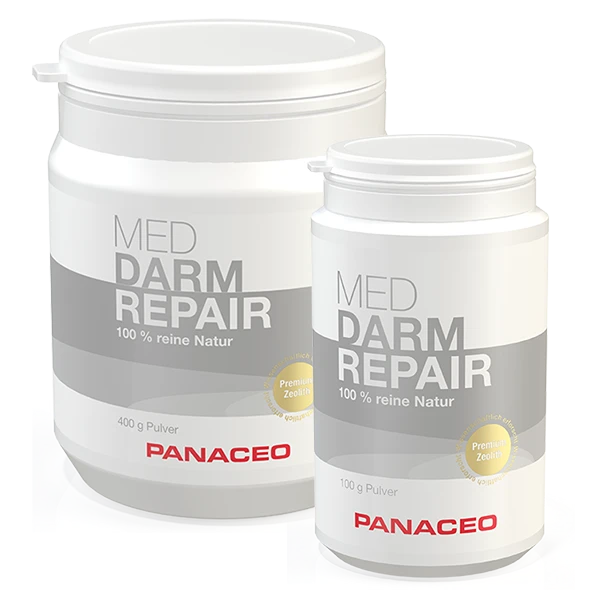
PANACEO MED DARM REPAIR
Natural medical device with PMA Zeolite to support intestinal barrier regeneration in leaky gut and IBS – available as powder and capsules.
Discover ProductHow PANACEO PMA Zeolite Helps with Leaky Gut
Das PMA Zeolite natural medical device can protect the intestinal barrier and support regeneration of the intestinal wall. Evidence was provided by a study published in 2015 by an independent research organisation. This scientifically recognised gold-standard study was placebo-controlled and double-blind and examined the effects of taking PMA Zeolite in cases of leaky gut.
2015 Study Result
In the group that took PANACEO’s activated natural zeolite twice daily for three months, initially elevated zonulin levels fell by 30 percent into the physiological normal range. Permeability was reduced to a favourable level. In contrast, the values in the placebo control group did not change.
A more recent study by the University of Vienna again confirmed PANACEO’s positive effect on the intestinal wall in patients with irritable bowel syndrome. The inflammatory marker alpha-1-antitrypsin was significantly reduced only in the PANACEO group, while no change was observed in the placebo group.
An overview of all clinical studies and observational studies on PMA Zeolite is available in our study overview.

Note: This article is for general information only and is not a substitute for medical advice, diagnosis or treatment. PANACEO MED DARM REPAIR is a medical device – please follow the instructions for use. Consult a healthcare professional if symptoms persist.