
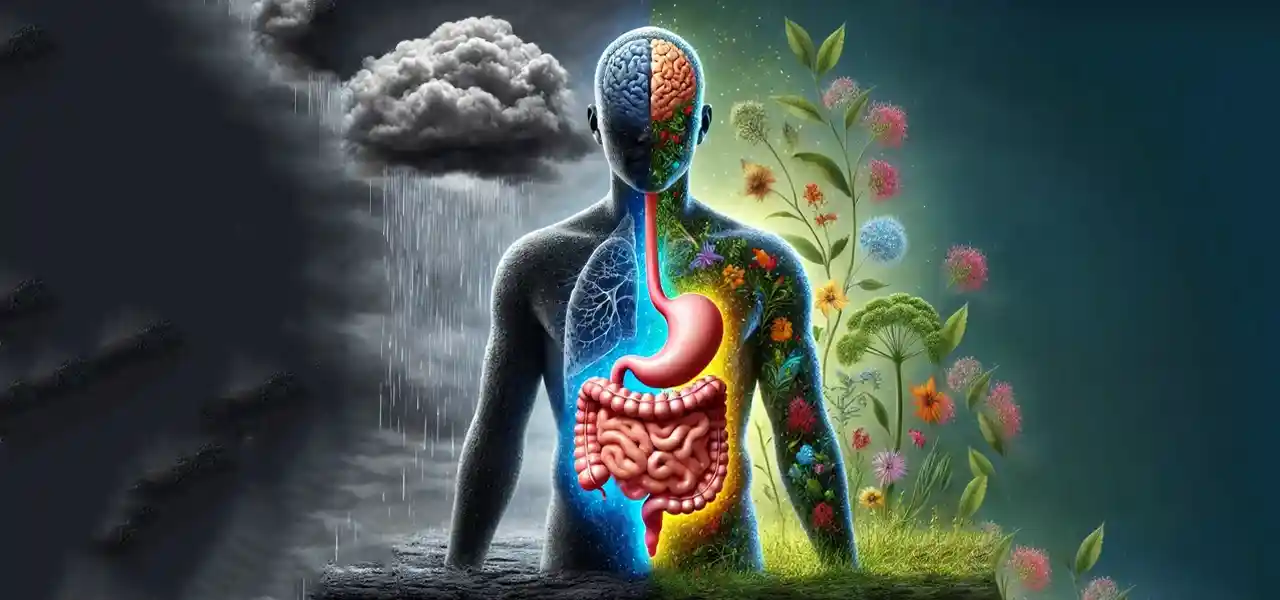
Depression is not a temporary sadness or a series of bad days. Anyone suffering from depression is surrounded by far more than melancholy, listlessness and dark thoughts. Depression is a real and very serious illness that affects millions of people – with a strongly rising trend. According to current estimates, around 10.8 percent of women and 7.6 percent of men in Germany, and around 7.5 percent of the population in Austria, are affected. That is why depression is the subject of intensive clinical research – and increasingly the gut is coming into focus, and with it also zeolite and the special variant PMA-Zeolite.
What Causes Depression?
The most common known causes of depression are a combination of genetic, biological, environmental and psychological factors. These include family predispositions, chronic illnesses, traumatic experiences, ongoing stress and – often not sufficiently considered – imbalances of neurotransmitters in the brain. Neurotransmitters play a central role in regulating various functions in body and mind and are especially important for mood, sleep quality and appetite. If they become unbalanced, depression can result.
The Role of the Gut: How Our Abdominal Brain Influences Mood
What few people know: our gut can play a significant role in the development and course of depression, because it is an important production site for neurotransmitters such as serotonin that regulate mood. Around 90–95% of the body's total serotonin is produced in the gut – particularly in the enterochromaffin cells of the intestinal mucosa. Dopamine too, important for our reward system and motivation, is largely formed in the gut.
A healthy gut can therefore contribute significantly to mental health, while imbalances and inflammation in the gut are linked to an increased risk of depressive disorders.

The Basis for a Healthy Gut: Strengthen the Barrier & Promote Detox
There is currently a lot of talk about the microbiome. A healthy, balanced microbiome is indeed of great importance for mental health. However, only a healthy gut with an intact intestinal wall can host a balanced microbiome. It is therefore crucial to promote not only the microbiome but first the health of the intestinal wall.
A healthy gut forms the basis for an intact microbiome and thus plays a central role. A healthy intestinal wall and a functioning intestinal barrier are essential to prevent pollutants, toxins and pathogens from entering the body.
The Importance of the Intestinal Barrier
What is the intestinal barrier?
The intestinal barrier consists of a dense layer of epithelial cells held together by so-called "tight junctions". This structure prevents harmful substances from entering the bloodstream. A disrupted intestinal barrier, also known as "leaky gut", can lead to increased permeability – and thus raise the risk of systemic inflammation and chronic illnesses.
Numerous studies also show that people with irritable bowel syndrome (IBS) often suffer from increased depressive and anxiety-related symptoms. Research has shown that up to 62% of people with diarrhoea-dominant IBS and up to 50% of those whose IBS was triggered by a gastrointestinal infection have increased intestinal permeability. This increased permeability can worsen neuropsychiatric symptoms such as low mood and anxiety.
First Repair the Gut with PMA-Zeolite, Then Build Up the Microbiome
First, it is important to repair the gut and thus improve the gut environment. To do this, pollutants such as heavy metals and toxins – which can now burden us all – must in particular be removed from the gut so that the intestinal wall and barrier can recover.
The natural volcanic mineral zeolite is a means of choice here. However, zeolite is not just zeolite: the special PMA-Zeolite from PANACEO is refined through a special process (PMA = PANACEO Micro Activation) so that it can carry out adsorption processes in the human organism optimally. In addition, PMA-Zeolite is a certified medical device that has been studied in numerous trials as the leading active substance among the currently available zeolite forms and is suitable for long-term use. So it matters a great deal which zeolite you use to repair and strengthen your gut.
PANACEO MED DARM REPAIR – Your Path to a Healthy Gut
We recommend using PANACEO MED DARM REPAIR as a course to let your gut recover and strengthen it – also with regard to an additive, i.e. supplementary, accompaniment in depression. MED DARM REPAIR is not a substitute for medical or psychotherapeutic treatment, but can sensibly support it.
- regulates bowel movements and relieves typical symptoms of leaky gut and IBS (e.g. bloating, abdominal pain, inflammation)
- supports the microbiome and strengthens the intestinal wall and liver
- selectively binds ammonium as well as pollutants (e.g. aluminium, lead, arsenic, cadmium, chromium, nickel) for excretion
- creates the basis for the gut to produce sufficient serotonin again – important for mental health
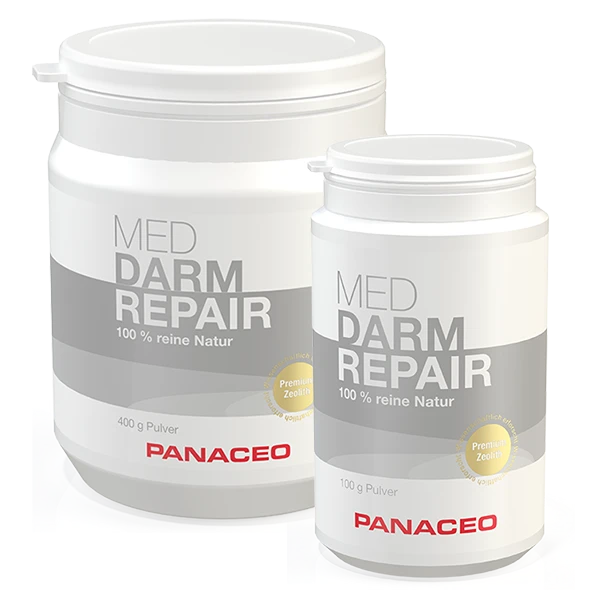
PANACEO MED DARM REPAIR Powder
Certified medical device with PMA-Zeolite: repairs and strengthens the gut, supports the intestinal barrier and binds pollutants in the gut.
Discover product
Note: This article is for general information only and is not a substitute for medical or psychotherapeutic advice, diagnosis or treatment. If you experience persistent low mood, anxiety or other mental health complaints, please contact a doctor or a mental health professional. PANACEO MED DARM REPAIR is a medical device to support gut health and is not a treatment for depression.