
Did you know that you are truly never alone? Trillions of tiny organisms thrive in your colon – a complete ecosystem. Alongside fungi and viruses, your gut is home to hundreds of bacterial strains and trillions of microbes. When harmful bacteria multiply excessively and the number of beneficial bacteria such as bifidobacteria or lactobacilli decreases, doctors speak of dysbiosis. To restore the balance, naturopaths recommend gut restoration. But what exactly is gut restoration – and how does it differ from a colon cleanse?
The Gut Flora – the Root of Our Health
Since the gut microbiome – the sum of all microorganisms living in the gut – became one of science’s hottest research topics, it has become clear how enormously this 1.5 to 2-kilogram biomass influences all our bodily functions. The gut’s inhabitants support and modulate our immune system, supply us with vitamins and other nutrients, interact with our central nervous system, produce hormones and break down toxins. Without this gut microbiome, also called gut flora, no human could survive.
How Does the Gut Flora Become Disrupted?
An infectious diarrhoeal illness or a course of antibiotics can cause a bacterial imbalance. Stimulants such as alcohol and nicotine, or foods contaminated with heavy metals, can also cause the wrong bacteria to multiply rapidly while the good ones gradually disappear.
Why a Lack of Fibre Harms the Gut Flora
The modern Western diet is usually low in fibre but all the richer in dietary fat and sugar. Nutritional physicians and gastroenterologists are convinced that the reduction of fibre in particular has an especially damaging effect on gut health. Environmental toxins and harmful substances such as additives and preservatives do the rest. As the number of beneficial bacteria falls and some strains disappear entirely, the number of harmful bacteria rises excessively. They form inflammatory, toxic breakdown products that cause gut complaints such as diarrhoea and bloating.
What Complaints Does Dysbiosis Cause?
A bacterial imbalance in the gut has health consequences: the sensitive intestinal mucosa becomes weak. The intestinal wall – after our skin, the second protective barrier of our health – becomes more permeable. This disruption of gut function, medically known as leaky gut, weakens our immune system. The development of irritable bowel syndrome or an inflammatory bowel disease can also be promoted by leaky gut.
PMA Zeolite helps prevent it
Whether bacterial toxins or contaminants from food – the volcanic mineral clinoptilolite zeolite can effectively protect the intestinal wall in cases of dysbiosis and help prevent leaky gut. If the intestinal wall is already too permeable, this highly active volcanic rock supports its regeneration. A scientifically recognised study published in 2015 clearly demonstrated this. The zeolite is not absorbed by the body and is completely excreted in the stool after binding the harmful substances.
How Can I Restore the Balance of Bacteria?
At the same time, the goal is to reduce the number of harmful bacteria and promote the growth of the beneficial ones. Many believe that a colon cleanse with Glauber’s salt or Epsom salt is the easiest way to quickly get rid of harmful bacteria. Both salts (sodium and magnesium sulfate) are taken diluted with water and act as a laxative to empty the gut completely. The problem: both salts remove not only a lot of fluid from the body but also valuable minerals. And if the intestinal wall is already too permeable – as in leaky gut – the intestinal mucosa is irritated even further.
In addition, many of the beneficial bacteria are destroyed and flushed out in the process. This is why many conventional doctors advise against a colon cleanse. As a rule, they only prescribe strong laxatives and enemas for constipation or to prepare patients for a colonoscopy or surgery.
How Does Gut Restoration Differ from a Colon Cleanse?
Unlike conventional doctors, alternative practitioners understand a colon cleanse as freeing the gut of harmful substances. They assume that food residues accumulate in the gut together with harmful substances. The gut is to be freed of such undigested substances, also called “slags”, so that it works properly again. In alternative medicine, colon hydrotherapy is one method used for this.
Gut Restoration with Probiotics
Gut restoration addresses the disruption of the gut microbiome by promoting the growth of the good, beneficial gut bacteria. Especially after a course of antibiotics, taking probiotic supplements is often recommended. These usually contain live yeast cultures and gut bacteria such as Lactobacillus casei or Escherichia coli. Taking such probiotics is meant to increase the number of certain bacterial strains immediately – so it shows a direct effect. However, as soon as the probiotics are no longer taken, the state of the microbiome can quickly deteriorate again. A switch to a healthy, fibre-rich diet is more sensible, as this restores the gut sustainably. The German Nutrition Society recommends consuming at least 30 grams of fibre per day.
Which Foods Are Rich in Fibre?
Fibre consists of high-fibre food components and is therefore found almost exclusively in plant-based foods. Foods with plenty of soluble fibre are the favourite fuel of beneficial bacteria.
Soluble Fibre
Favourite fuel of the beneficial bacteria:
- leeks, onions, garlic
- chicory and artichokes
- dried fruit and bananas
- whole grains and legumes (white beans, lentils)
Insoluble Fibre
Regulates digestion and “cleans” the gut:
- wheat bran
- flaxseed
- psyllium husk
The good bacteria cannot process insoluble fibre, but it regulates and improves digestion. As it contains a lot of cellulose, it swells in the stomach and provides plenty of bulk in the gut. The greater stool volume stimulates intestinal peristalsis and can help prevent gut conditions such as diverticulitis and colon cancer. Anyone who wants to cleanse and restore their gut naturally is therefore best advised to eat a fibre-rich diet and follow a flaxseed or psyllium husk regimen.
How PMA Zeolite Supports Gut Restoration
To fully restore gut function, it is advisable to strengthen the intestinal mucosa at the same time. The gut, as a highly complex organ, only functions well when the intestinal wall is intact and healthy. If harmful bacteria dominate for a long time, the wall becomes more permeable. That is why it is important not only to restore your gut flora – for example with psyllium husk – but also to protect and strengthen your gut barrier in parallel.
With the pure, natural volcanic mineral zeolite from PANACEO you can combat the porous intestinal wall and effectively support its regeneration. At the same time, the latest PANACEO study on irritable bowel patients showed that taking it not only regenerated the intestinal wall but also allowed naturally occurring lactobacilli and bifidobacteria to colonise better, while negative Firmicutes bacteria were pushed back. PANACEO thus also contributes indirectly to gut restoration by positively modulating the natural gut microbiome.
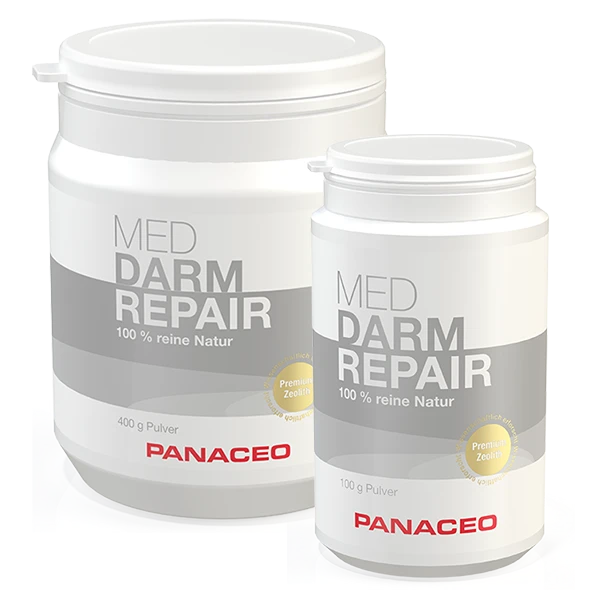
PANACEO MED DARM REPAIR
Natural medical device with PMA Zeolite to support the intestinal barrier and sustainable gut restoration – available as powder and capsules.
Discover product
Note: This article is for general information only and is not a substitute for medical advice, diagnosis or treatment. Consult a healthcare professional if symptoms persist.